In the world of horology, a watch is more than just a tool for keeping time—it is an extension of a man’s wardrobe and an anchor for his personal style. For the modern collector, the sheer volume of choices can be overwhelming. From vibrant “Tiffany” blues to deep forest greens, the market is flooded with color.
However, if you are building a foundational collection—whether it’s three watches or thirty—there are three “pillar” colors that provide the versatility, elegance, and timelessness required for any occasion.
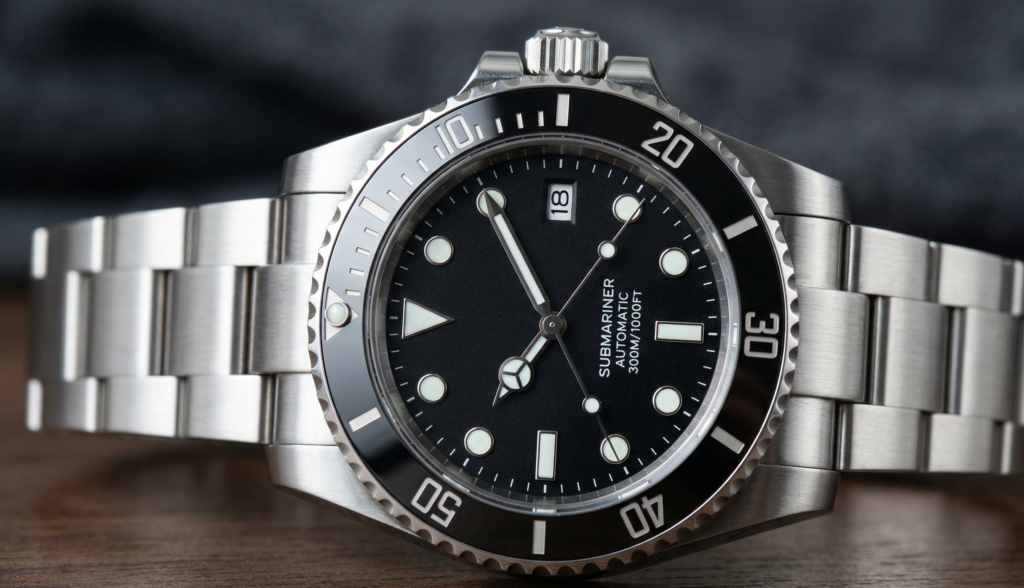
1. The Ink Black Dial: The Professional Standard
The black dial is the “Little Black Dress” of the watch world. It is the most versatile color a man can own, primarily because it offers the highest contrast for legibility and pairs effortlessly with almost any attire.
Why it works: Black is the color of utility. Historically, black dials were used for “tool watches”—divers, pilots, and military personnel—because white hands pop against a dark background. Today, a black dial on a stainless steel bracelet is the ultimate “GADA” watch (Go Anywhere, Do Anything).
Style Tip: Wear a black-dialed watch with charcoal or navy suits for a formal look, or pair it with a leather jacket for a rugged, weekend aesthetic.
2. The Sunray Blue: The Modern Classic
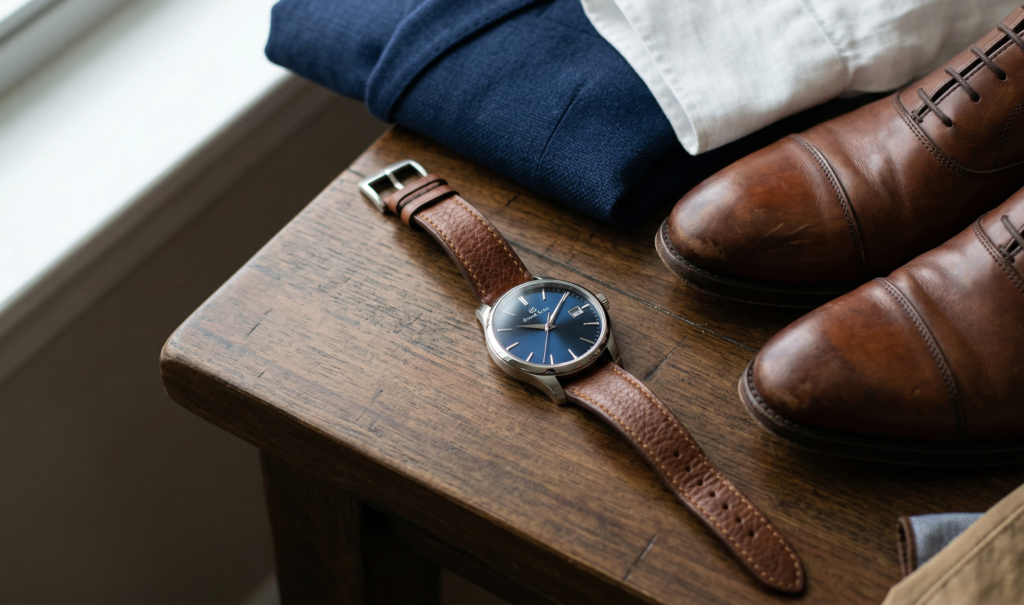
If black is the color of utility, blue is the color of elegance. Over the last decade, blue has moved from a “trend” to a permanent staple in watch design. It offers a level of depth and playfulness that black simply cannot achieve.
Why it works: Most blue dials feature a “sunray” finish—microscopic lines radiating from the center that catch the light as you move your wrist. This makes the watch look different at every angle, shifting from a deep, near-black navy in the shade to a vibrant cobalt in the sun.
Style Tip: Blue dials are the perfect companion for brown leather straps. The “Blue and Brown” combination is a classic style move that works exceptionally well with smart-casual outfits like chinos and a crisp white shirt.
3. The Pristine White or Silver: The Formal Anchor
While dark dials are dominant today, the white or silver dial is the true heritage choice. Before the rise of sports watches in the 1950s, almost all luxury dress watches featured light-colored dials.
Why it works: White and silver dials exude a sense of “clean” luxury. They are visually lighter on the wrist and often make a watch appear slightly larger and more prominent. A silver dial with a subtle metallic grain is particularly effective at reflecting light, giving the watch a jewelry-like quality.
Style Tip: This is your “Wedding and Gala” watch. A white dial on a black alligator-print strap is the height of formality. However, you can “dress it down” by putting it on a colorful nylon (NATO) strap for a preppy, summer vibe.

The Verdict
Building a collection around Black, Blue, and White ensures that you are never underdressed.
- Black for the mission.
- Blue for the statement.
- White for the occasion.
By mastering these three tones, you create a “capsule” collection that transcends fashion cycles and maintains its value and relevance for decades to come.